A Life Progress bar

We engineers love progress bars. In everything: while copying files, downloading them, when updating our TVs. Even on coffee machines.

As the new year started, I thought life itself is progress and movement. New Year celebrations is somewhat arbitrary, because every day, every second, every instant a new year starts: there’s always an entire year before that instant. That is not exclusive of January 1st, 00:00.

“New Year” is a reminder of the ephemeral nature of our selves. We get to transit this existence for a short and, crucially, an unknown amount of time. I, for example, have been fortunate to have outlived a lot of my ancestors. I am also fortunate I be alive at a time with resources and with means to live a peaceful and good existence. In summary, I am grateful, I appreciate every instant of it; and I don’t take it for granted.

Not surprisingly, as I grow older, I have an increased awareness of my own mortality. Perhaps, the recent, unexpected passing of a close friend, who was full of life and younger than me, has increased this awareness.

We only have the present, as the past is gone, and the future, while it can be imagined, is not guaranteed. This awareness is well known in classic philosophy. And meditations about death are frequent in the ancients’ writings and teachings. There’s a latin phrase: memento mori. Remember of death.

I read somewhere about Kevin Kelly’s “Death Clock”. Essentially a countdown counter for the days you’ve left, assuming you make it to the US average life time (82 years).

I thought a progress bar would be a better representation for our probabilistic life journey. Since we have progress bars in lots of things…why not one for life?

So I built one! As I write this, it shows mine like this:
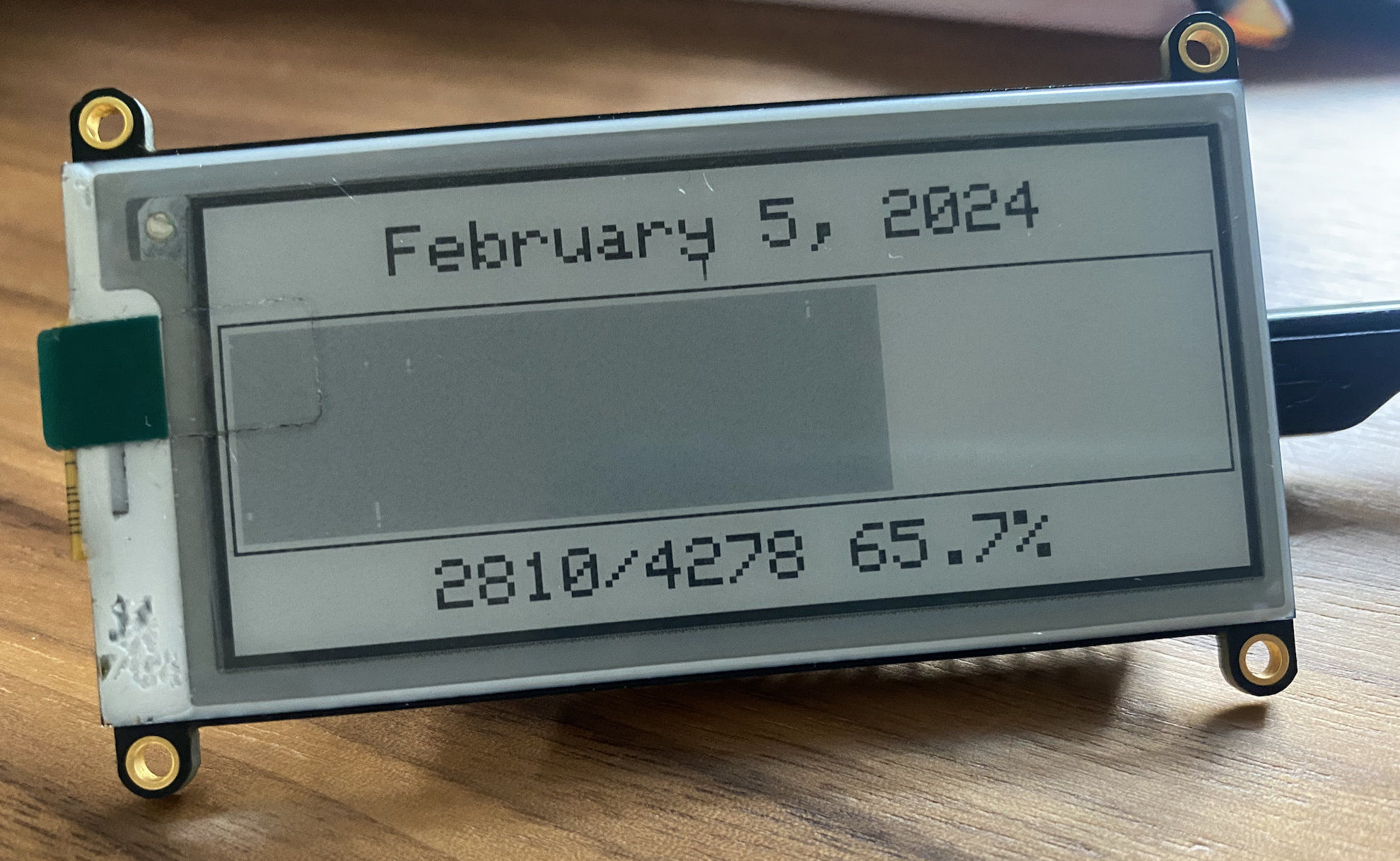
Being an optimist, two thirds of my entire life is gone…forever. In that gray bar, I learnt, loved, built, guided, fell, stood up, fell again, raised a family, traveled, helped, been helped. Every single pixel is a representation of those things I’ve experienced. If things go well, I’ve got another one-third-ish more to go. What will those pixels bring to my life?

Some have told me it is a depressing reminder, I see it quite the opposite, as a good reminder to make the most of each second, each minute, and each day; as it is a gift. Carpe Diem. Harvest the day!

Finding and reconnecting with an Old Friend

We were once inseparable. I confidently shared with her my doubts, fears and celebrations. I spent all my college years with her, next to me. Every class, every lab, every exam. All my wins and all my struggles.

I graduated. I got busy. Found a job, then another one. I got married, had kids, traveled the world, moved around. I don’t know how and when it actually happened. One day we just stopped seeing each other, and I, I have to admit, I kind of forgot about her.

Others took her place. They had their precision. Most were younger and brought new capabilities. But deep inside, she was still somewhere in my mind.

And one day, although invisible, her presence became so strong that I went on to find her.I searched and searched and eventually found her again! Time had gone by, and it showed a little bit. For both of us. I did quick math, and it had been maybe more than twenty years since we interacted in any meaningful way. I tried to get her attention. See if she recognized me.

For a bit, she ignored me. She remained indifferent and unresponsive. But I persisted and continuously and gently said “hello” and asked “Are you in there? It’s me!” Nothing worked. Was she gone forever?

I figured maybe she needed a jolt of energy. I gave her that and tried again. This time, I got something in response! So exciting. “Hey!, it’s me!”

Slowly, our routines and ceremonies kicked in, but she did not understand many of them. I instinctively pushed her buttons, as I’ve done so many times before. Some worked, some didn’t.

Then I pressed “Mode + 2”, and realized most of her memory was filled with some random content. I knew I could fix it. And I did.

Almost instantaneously, she came back. My dear, loyal, precise, reliable Casio FX4000P programmable calculator was fully back.

Arrivederci carissimo

Building 20 in Microsoft Campus was the place of magic. I spent countless hours white boarding the future there.

One of those sessions sometime in 2008 (perhaps earlier), was with my friends Gianpaolo Carraro and Vittorio Bertocci. 2 and 1/2 Italians discussing in both English and with hands, the architecture of modern identity management in a software world that was evolving towards a services one. We were in the middle of the “X as a Service” trend.

The discussion was more of a lecture. I didn’t know it then, but I was listening to the first of many master classes by Vittorio. I remember feeling I was listening to a renaissance artist. Concepts on the whiteboard evolved naturally from the simplest to the most complex. I felt my brain working hard to keep up with the concepts, retaining a whole new vernacular: “claim“, “relying party“, “identity provider“, “federation provider”, “trust“. And so it went on for hours.

I left that session intrigued and in admiration. Intuitively, I knew that was going to be big.

The following year, I was tasked to identifying all obstacles for developing and moving apps to the cloud. Microsoft was building “Red Dog”, what eventually would become Microsoft Azure. And as I started looking into the challenges of building for this paradigm, all the semi-dormant knowledge I’ve got from Vittorio came back. Advanced identity was going to be key to unlock the cloud.

I proposed building a guide for developers covering all core scenarios for identity and access management: SSO, Federation, etc. It took quite some convincing. My bosses were not impressed. But I finally secured the approval (and the budget) and went on to make it happen.

I immediately enrolled the help of others, especially two people who would have a tremendous impact in my life: Matias and Vittorio.

The “Guide To Claims Based Identity and Access Control” was completed and published in 2009. Two years later we published a 2nd Edition, which was double the size (in pages). That signaled to me that we were dealing with a growing problem, not a shrinking one.

Vittorio did for me something no one else had ever done. He referred me for a job position in Microsoft Identity team. I interviewed and did not get the job. It was very upsetting, especially because I felt I had disappointed him.

In late 2012 I left MSFT to start Auth0 with Matias. I had dinner with Vittorio in the Thai restaurant we used to go to in Redmond. He was skeptical about our project, but wished me well. I joked he should join us. We laughed as we had done many times.

A few years later, he did join us. And made Auth0 better. We joined forces with Okta, and made it better too. And across all those years, made our whole industry better, through his generous spreading of ideas, concepts, teachings, specs, and world class presentation skills. I can hear his trademark “Buongiorno everybody!!” opening at each one of his talks.

Vittorio was always generous with his time, and deep and wide knowledge. There was not a single occasion I pinged him on Slack he would not respond. We debated amply and passionately about business, architecture, philosophy, programming, books (many books), travel, places, countries, people. I feel so grateful for all those moments.

My friend Vittorio left us yesterday. His departure leaves a big void: in our world, in our minds and in our hearts. There won’t be any of those debates anymore. But there will always be the memories, and his legacy of excellence.

Arrivederci carissimo. Grazie per tutto.

Märklin

I was 7 or 8 years old. I made a new friend at school and he invited me to a playdate at his home. Oh, the adventure! He lived not too far from my home, but long enough my mom had to drive me there.

We played lots of things, but I only remember one toy: a Märklin set. My father told me about watching “Marklin trains” on shop windows. He could never afford them, but here I was seeing one and playing with one. It was so impactful, I never forgot.

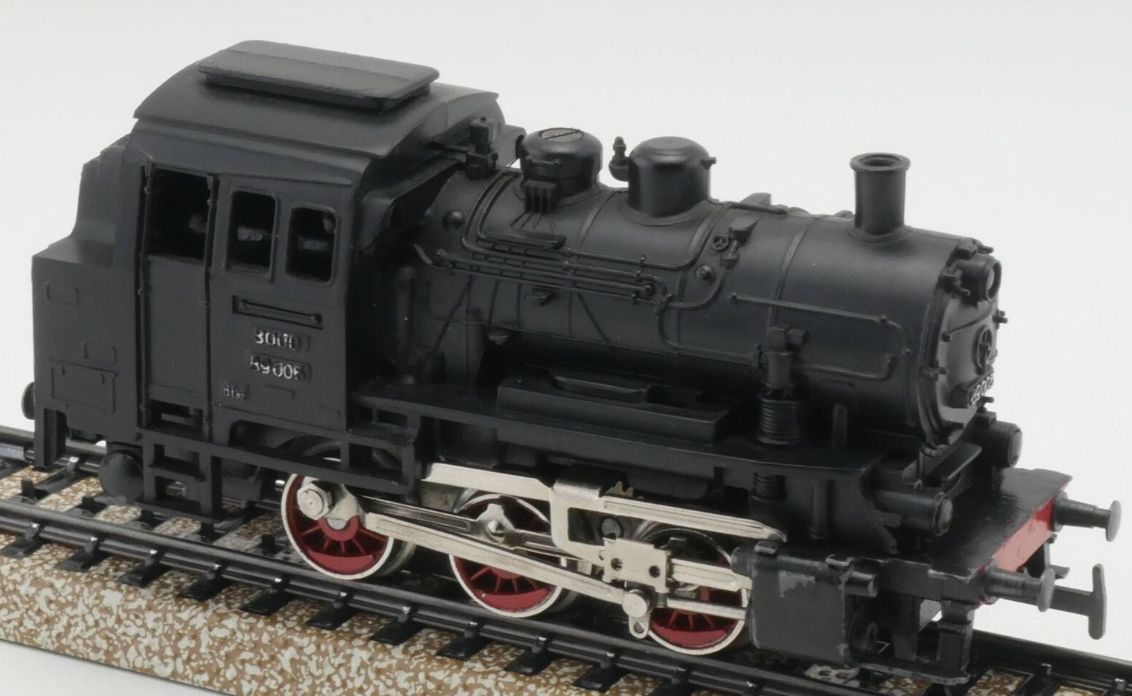
My friend owned one of those starter sets: a small 0-6-0 steam engine, and a couple cars. He had tracks for a small oval and one switch.

It was fascinating to see it all working. We’d build tunnels with cushions. We’d turn off the lights of his bedroom and marvel at the tiny headlights of the engine as it made it’s way to the infinite loop that led to nowhere, except the stations of our imagination.

Several years later, my parents gifted me my very first train set. A Lima starter set. It also came with a tiny steam engine (a 0-4-0) and few cars. And the spark for trains never disappeared. Over many years I took over our entire garage, and built a large layout inch by inch. I bought and got several models over time. Some where Christmas presents, some I got from the paper equivalent to Craigslist, which was aptly called “Segundamano” (“Second Hand”).

The base table for my layout was left by the previous (German) owner of the house we moved into. He’d removed all tracks and components, but the table still had the marks of where the original tracks where. And, being German, it had been a Märklin set. Only vastly larger than my friend’s. But I could only see vestiges of it.

I built my layout on top if it. And it was a permanent work in progress for YEARS. As, Penelope, I did and un-did. Created new scenery, new houses, new branch lines. In my world, it snowed, sun shined, and there were barren areas like the Argentinean Patagonia. All coexisted in the same 5 square meters of my kingdom. I had TONS of curved tracks, so my father suggested using them all to build a loop. And it became one of the most fascinating sections of the layout.

Regrettably, I only have a single picture of it, which my mom found for me, which barely shows anything, except one of the biggest features: the large mountain with a track looping around it. But you get a sense of the dimensions it had.

Despite the single picture, I remember every corner of it, every tricky curve where cars would derail more often, every tree, every house, every bridge, stream, lake, coal pile, public square. It was my world.

Every month I would ride my bike to a bookstore 2.5 km away from my home, and buy Ferromania, the local model railway magazine. I still have the collection. I marveled at the incredible models it showcased. The American magazines: Model Railroader and Railroad Model Craftsman where incredibly expensive for me, and I would only get editions which were months old.

One day, I decided to try my luck, get a $20 (dollars) cashier check from a local bank and mailed it for a 1 year subscription. $20 was a LOT of money then. MONTHS later my first issue arrived home and I could not believe it. It was a miracle. I could not buy anything advertised in the magazine, but I got a lot of ideas which I implemented in my models.

Years later, I met my first girlfriend and she gifted me a locomotive which was compatible with my train. A small diesel shunter made by Rivarossi. I decided to speed up the inauguration, and with a big ceremony my trains “cut the ribbon” (a real one) and I declared the project “done”.

A few years (and girlfriends) later, I dismantled the whole thing and parts and pieces stayed in storage and some I brought with me to the US.

I married, had kids, they grew up. I bought trains for them of course. I bought a wooden Thomas in Reading, UK for my son. I then built a very simple layout for them. But it was a poor shadow of mine. And it never really took off. I scrapped it and used the board to build a working table for my boat.

My older son still loves trains today though, real ones more than models. So we visit museums, see real trains in trips and generally enjoy the subject. He now knows more than I do about history of trains.

This year, I searched in eBay for the Märklin starter set that set all this in motion. And of course there it was. The 3000 tank engine was just waiting there for me, so I brought it home where it belonged all this time. And I experienced the same happiness and awe I felt 40 years ago, as its wheels turned and its headlights illuminated once again the track that led to nowhere in real life, and everywhere in our imagination.

The Way

The Way of St James crosses north Spain, from France to Santiago de Compostella, and then to the vast ocean on the coasts of Galicia, in Finisterre. Literally “the end of the earth”.

Over centuries, the trail was hiked by millions of people looking for inspiration, compassion, kindness, renewal, forgiveness, companionship, solitude. They walked with burdens to get rid of, guilt to cure from, hopes to augment and reignite, dreams to revive, ambitions to be found, and gratitude to be given; even to no one in particular; or to whoever happened to cross their path in the Way.

While walking The Way, I came across a quote from Paulo Coelho’s book The Pilgrimage:

When you travel, you experience, in a very practical way, the act of rebirth. You confront completely new situations, the day passes more slowly, and on most journeys you don’t even understand the language the people speak.

I never thought about traveling in this way. But I was lucky to read the quote half way of The Way, and I looked at everything as a newborn child from that moment.

I looked at every turn of the Way with the expectation and awe of a new world opening up in front of me. Every cloud, every shadow of the sun through the chestnuts and oaks. I looked at the trail’s semi-buried and loose small stones. I looked at the thousands of stones left on the Cruz de Ferro, some with names and dates written on them. I wondered if they thought about being reborn too. I left my anonymous one randomly. I’ve picked it up days before my trip from one my favorite trails in Washington.

I looked in detail at the old bricks, stones and wooden beams that made up long abandoned barns, sheds and horreos. I imagined the dreams, frustrations, and hopes of everyone who worked and lived in these structures that were slowly being retaken by nature. I felt the resignation of those who felt trapped in poverty, ignorance and just a hard life. I felt an immense sense of gratitude for everything I have and the wonderful experiences I’ve had in my life.

I looked at the stones polished by the small streams in the greener and wetter areas of Galicia. Each one of them witness to the Pilgrims’ expressions of relief as they sunk their tired feet into them.

North Spain is the land of my ancestors, I walked tens of miles imagining them walking next to me on the same paths. They showed the newborn me their cities and towns. Their vineyards, fruits, goats and cows. I heard their voices and laughter as they run in the large plazas, markets and churches. Were they aware of my presence? Did they hear my questions?

After crossing into Galicia, I saw my teenager great-grandfather asking his father permission to cross the ocean to this great place called America, were all dreams would become true. And all opportunity was. He told me he got it when he turned 15. And off he went.

And although his dreams perhaps didn’t fully materialize, I told him that eventually everything turned out just fine, so he could be at peace. I hope he heard me.

Becoming a Spartan

Many people ask me why I like running OCRs (Obstacle Course Races). Many don’t get why I would voluntarily spend a few hours rolling through mud, climb ropes to nowhere, dive under freezing cold (muddy) water, crawl under barbed wire, carry a 100lb rock around with no specific purpose, and generally end up with a few bruises, some minor cuts, and scratches all over; and return home with dirt and mud everywhere.

What is the point? they ask. They are right. There’s no obvious point. I am not fighting a war. I’m not escaping from anywhere.

I don’t run competitively. I am not looking for a trophy or medal. I don’t care about passing other runners. I do it because it is uncomfortable and difficult. The purpose is simple: practice discomfort. When “real”, unexpected, unplanned discomfort arrives by fate; I am trained. I am less stressed, not surprised, less concerned, more hopeful, and generally better prepared.

Let’s say I ran out of gas driving my car. And the nearest gas station is 5km away. It might not be fun to walk 10Km with a couple of 2 gallon gas containers. Having run a Spartan race, I know I can do it, with ample margin. Uncomfortable? Yes. A preferred situation? No. The end of the world? not even close.

Train for life. Train with life. Train by life. Aroo!

The Man in the Arena

A fragment of Theodore Roosevelt’s speech that has made its way into history and will be remembered longer than others is “The Man in the Arena”. It speaks directly to anyone doing something of any value.

Are you a student, an entrepreneur, a sports person, a teacher, a doctor, a fireman, a politician? (yes, some of them do something of value too, like anyone else). Are you doing anything of significance? This paragraph is for you:

It is not the critic who counts; not the man who points out how the strong man stumbles, or where the doer of deeds could have done them better. The credit belongs to the man who is actually in the arena, whose face is marred by dust and sweat and blood; who strives valiantly; who errs, who comes short again and again, because there is no effort without error and shortcoming; but who does actually strive to do the deeds; who knows great enthusiasms, the great devotions; who spends himself in a worthy cause; who at the best knows in the end the triumph of high achievement, and who at the worst, if he fails, at least fails while daring greatly, so that his place shall never be with those cold and timid souls who neither know victory nor defeat.

Many things in life are hard and not necessarily valuable, but almost everything valuable is hard. And building that is full of pitfalls, reverses, mistakes and misses. And some people will criticize you and be quick to point out all those mistakes you made. With ZERO skin in the game.

But, perhaps inadvertently, they are making you a favor because…the Obstacle is the Way. Remember that everyone has an opinion. But an opinion is not the truth. Opinions are not facts. Opinions are imperfect perspectives, from imperfect beings, with imperfect perceptions, imperfectly conveyed; and imperfectly understood.

Between stimulus and response there is a space. In that space is our power to choose our response. In our response lies our growth and our freedom. Viktor Frankl

And of course, the same, equivalent ancient wisdom from Epictetus:

When something happens, the only thing in your power is your attitude toward it. It is not the things that disturb us, but our interpretation of their significance. Things and people are not what we wish them to be nor are they what they seem to be. They are what they are.”Epictetus


Also, we often times misunderstand failure. Failure is not what we think it is. Failure is not the end, but the beginning of a new journey, with some newly acquired experience. A journey for which we can be better equipped.

Another quote from a magnificent Stoic:

“I judge you unfortunate because you have never lived through misfortune. You have passed through life without an opponent—no one can ever know what you are capable of, not even you.” – Seneca.

Hiking Hadrian’s Wall

A few years ago, I planned to tour Europe as I always did in our business. I thought it would be cool to retrace the steps of Roman Legionaries and Auxiliaries on Hadrian’s Wall with my team. Then 2020 came and with it, the global COVID pandemic which put a stop on all our travel. We were confined to our homes for months.

External forces might put on hold our actions, but nothing can put on hold our hopes and intentions except ourselves. And so, while COVID might have postponed the actual trip, I continued to imagine, plan, read, and discuss what that trip would look like. I also started learning Latin and over two years became reasonably proficient.

Two years and a half later, here I am in the UK, with part of my team, walking Hadrian’s Wall. I originally wanted to walk it all of it (about 80 miles from coast to coast), but having only one weekend available, we decided to just hike the middle part for around 40 Km.

Near Carlisle

Very appropriately, the day of the hike, I reached 800 days streak on Duolingo for Latin:

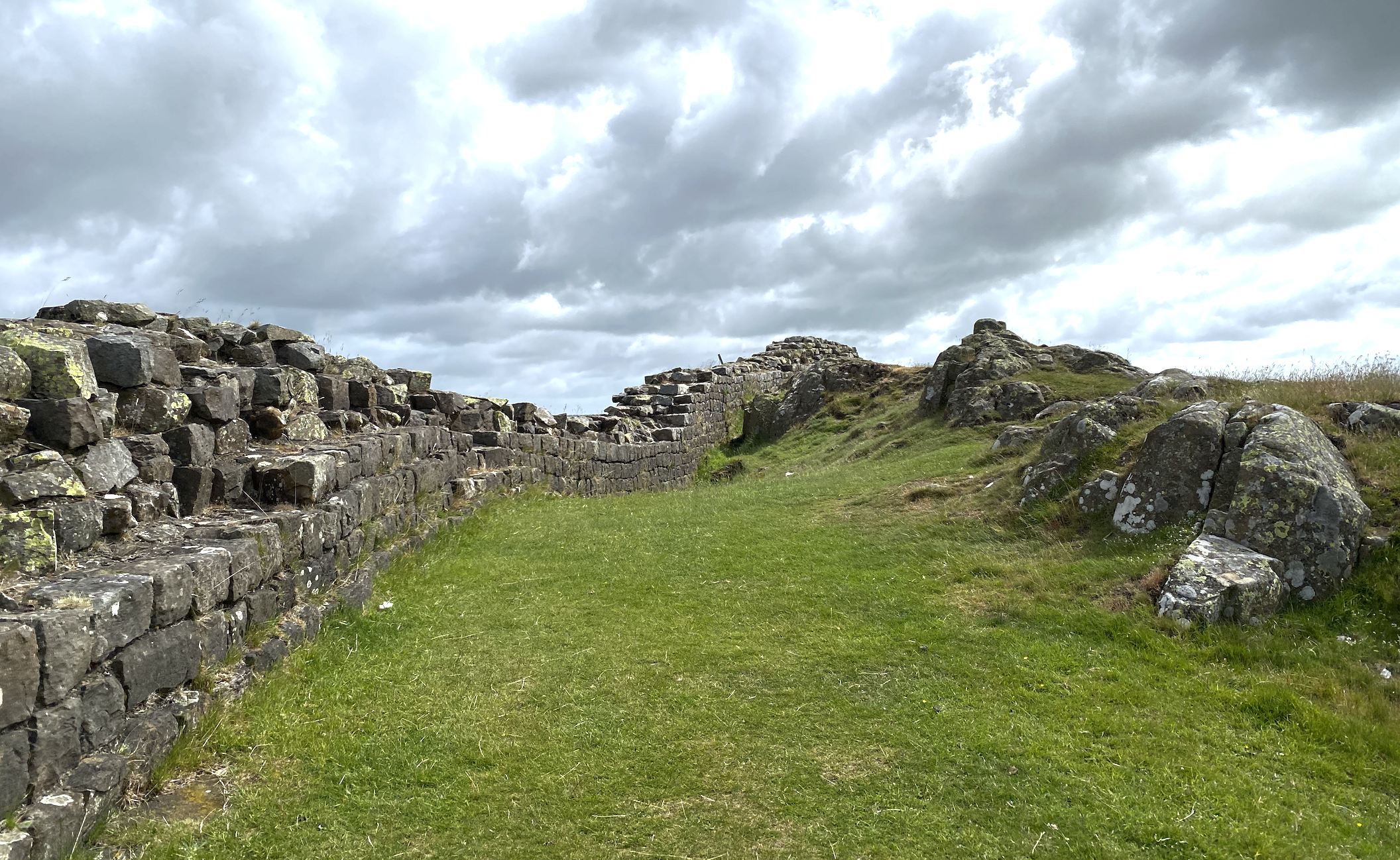
Members of the 20th Legion “Valeria Victrix” quarried, shaped, and carried the stones along the magnificent english countryside. They knew what they were doing, taking advantage of natural obstacles. Every roman soldier was a builder. It shows.

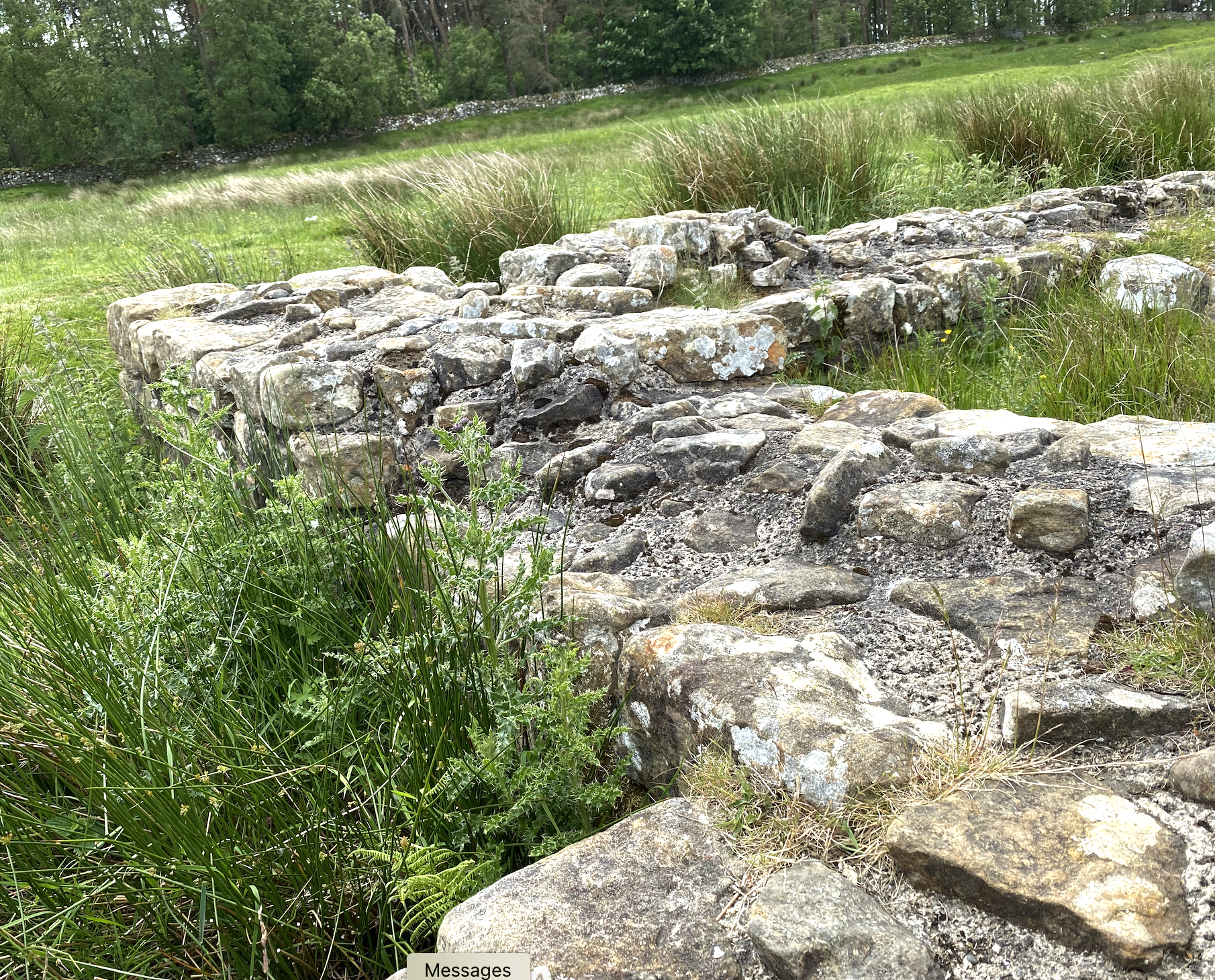
I walk and pretend to be one of them. Like many of them, I am far from home. I miss my family. I imagine and feel for a minute the anxiety of an imminent attack from the north, although the only threatening thing here is the cow dung I might step into inadvertently. I approach a milecastle and climb the ladder that leads to the door.

I smell the smoke from the stove and the nice dinner waiting for me and my comrades. MARCVS is a great cook and always enjoys making something up for the whole CONTVBERNIVM. Perhaps I can get some money back playing dice with my COMITES. Soon, it be my turn to get up there and switch places with IVLIVS. IVLIVS comes from CARNVNTVM. Tough guy, but good friend. My other mates are from all over the IMPERIVM.

Our CENTVRIO LOVSIVS SVAVIS came on a surprise visit. He’s a tough, grumpy old fella. He’s got more scars than I can count. No one doubts his courage, and we follow him with a mix of fear and admiration. He makes sure we are all disciplined and keep our kits in good shape.

I heard MASCVLI men drank all the beer, and he’s requested more. Good, maybe we’ll get some far up here. VINDOLANDA tends to get all the perks.

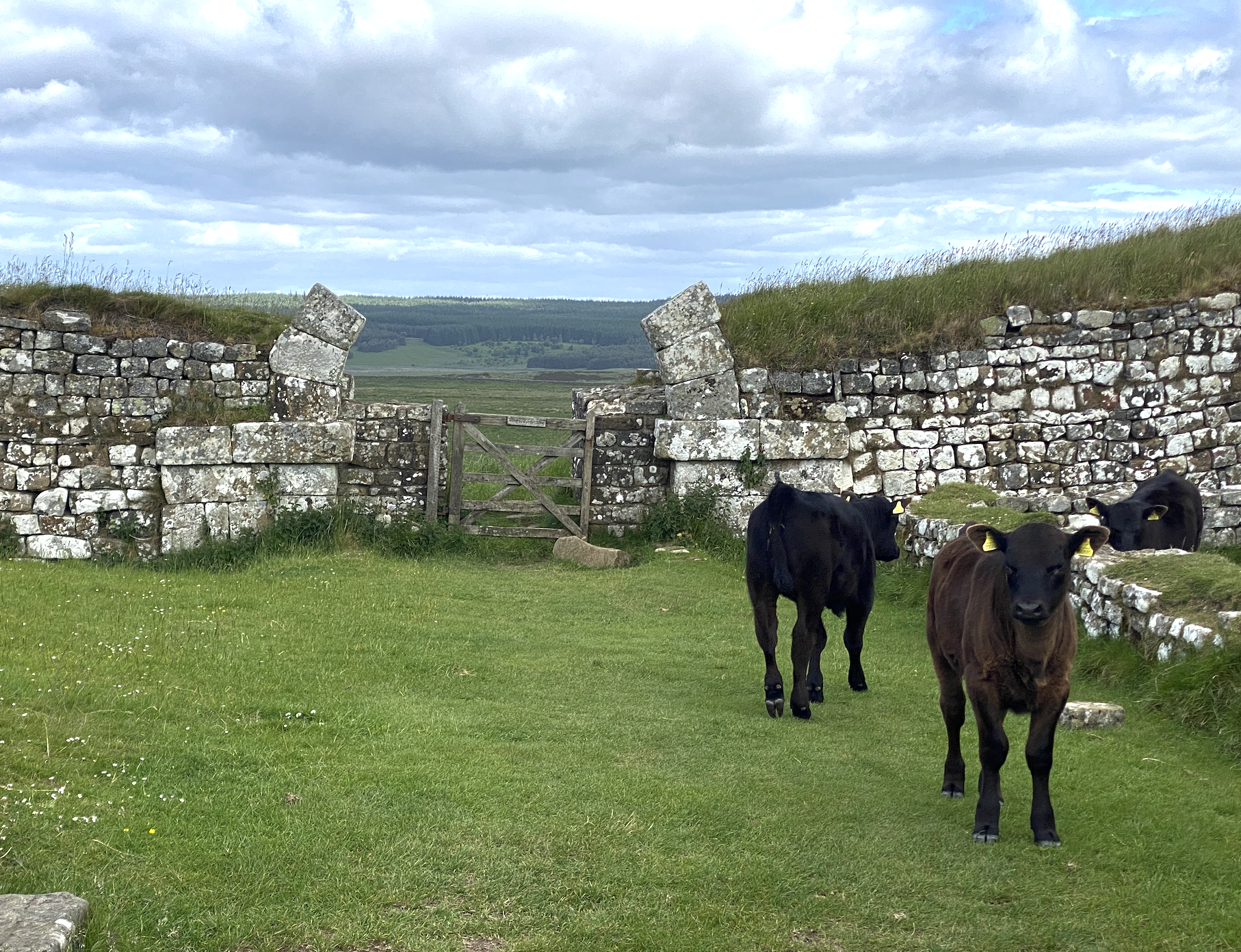
Last month, I was sent on duty to another section if the LIMES. This part has a gate into the north.

Any openings on the MVRVS make me uneasy. I like the feeling of watching the north from the security of the height. The construction of the MVRVS is solid, and I am sure it will stand hundreds of years; but I don’t trust the north people. They certainly don’t trust us either. Anyway, we are mostly at peace now, and trade flows both ways. Perhaps one day we could become true friends and the MVRVS and VALLVM would be obsolete. What a crazy idea! Not in 1900 years!

A War Game

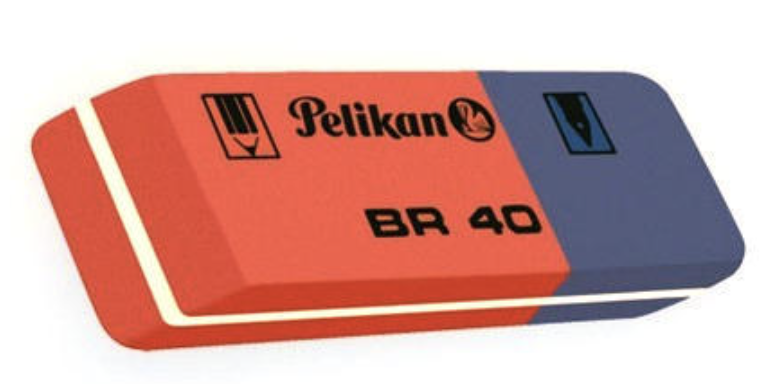
A rite of passage at school I remember, even 45 years after, was graduating from writing with a pencil to ink. Writing with a pencil meant you could erase and fix your mistakes. Ink meant that what was written was permanent.

Erasers were sold for both, but in my experience, only the pencil part worked well. The ink part (blue) made a mess or broke the paper.

It wasn’t until we mastered our (cursive) writing that graduation happened. I remember vividly practicing each letter in the alphabet until I could neatly write “a”, “b”, “c”, etc. and I could join them to make words.

And I also remember when my teacher told me “You can use your pen now!”. I was proud of the achievement. Pens became an essential part of my early education with the perennial and distinct blue stains on my fingers. And I’ve never lost love for fountain pens since then. I still use them to this day.

There were various types of ink. Blue was the mandatory color. For some reason, we were not allowed to use black ink until many years later when I had calligraphy classes. And we’d only use it for the gothic script. Not sure why.

But blue ink came in two types “permanent” and “erasable”. The “permanent” was darker blue and the normal rubber erasers had a very hard time with that. The “erasable” which was much lighter, was easier.

Sometime in middle school chemical erasers were introduced which were a small miracle. These were pens with a white tip embedded in a chemical that would make ink disappear. That made my life easier, and maybe a little bit more reckless as now my writing had a Plan B if I messed up.

And that gave me an idea to create a “war game” that became quite popular at my school. The idea was very simple:

  1. Take a piece of white paper and divide it in 2 areas
  2. Draw guns, bases, trenches, tanks and soldiers
  3. Then each player would surround their pieces with “mines” and “defenses” which were drawn with the chemical eraser.
  4. Take turns to draw (with ink) “attacks” from one side to another. If the ink hit a “mine” it would be neutralized.

It was fun. I loved drawing maps so I got creative with rivers, mountains, sandbags, and many more features. There was probably equal joy in drawing as in playing. You could cheat of course, as in most games, but there was no fun in doing it and it was easy to figure out who did it. I quickly avoided repeated offenders (who I can’t even remember).

The Brick

There are lot of trails where I live. You can leave civilization for a few minutes by just entering some of these into the woods. I have self-appointed myself “Protector of the Trails”. I carry a bag where I put all sorts of things that don’t belong there: plastic bottles, cans, plastic pieces. Thankfully, there are not many.

I find it easy to let my mind wander off climbing through these paths with Kate. Listening to the tiny drops falling from branches. Seeing specks of dust floating and forming rays through old stumps, and new trees growing on them when the sun shines.

I have come to recognize the shapes of the roots, the marks on the boulders, the pebbles around the tiny streams that change over the seasons.

One of those pebbles in a nice corner of my favorite trail was oddly shaped. It was barely surfacing over the dirt, half hidden behind the rotting leaves of the fall.

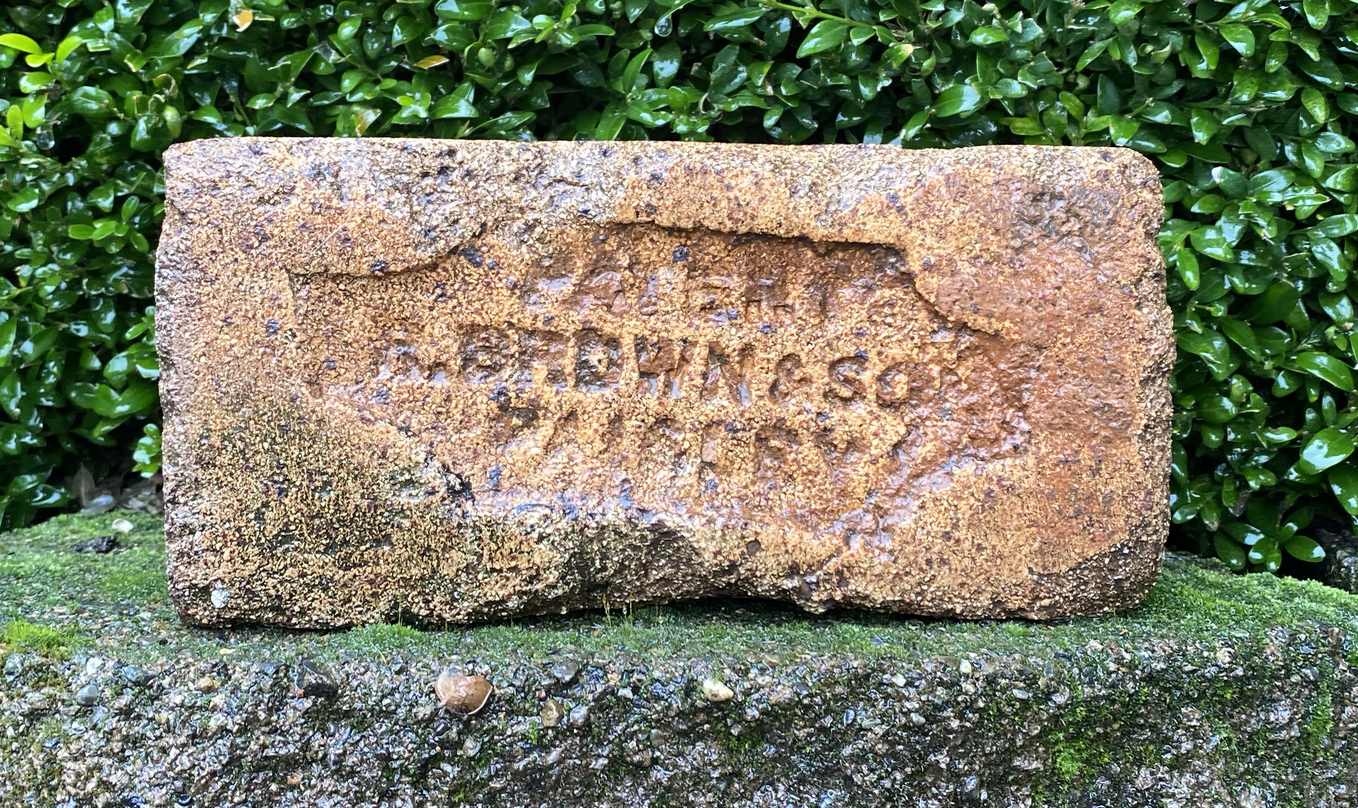
Every day I would walk past it, and every day I heard it telling me to set it free. I scrapped a little bit on the corner. It was lighter colored than anything surrounding it. This morning, my son came along, and we walked again past it. I picked up a twig and slowly removed the muddy contours, revealing a shape that is infrequent in nature. A perfect square. Its corner to be precise, although the vertice was long gone.

Slowly, the pebble gave away its secrets. And another shape emerged. An unmistakeable “R” next to a “B”. I removed all the dirt and mud on half of the perimeter of the pebble. And all from the top. The pebble was a brick.

Born in the XIX century in Scotland it turns out. “PATENT R.BROWN & SON PAISLEY”. Its journey from Paisley, Scotland to Redmond, WA will remain a secret forever. Did it arrive in a train? on a boat? was it destined to some other place? Was it part of a building? Throughout its existence it must have witnessed hopes, sadness, joy, celebrations, ambitions, progress, decadence and oblivion. Until it encountered us. And now with this post it enters the virtual and the digital. Transcending its ancestral earthly existence and becoming immortal.